
Tag: New Jersey Department of Health

  • Jefferson gets $4 million for mental-health unit

    Abigail Twiford/The Sun
    Local and state officials join Jefferson Cherry Hill Hospital administrators as they accept a check for the construction of the new unit.

    The township has taken a step toward making behavioral and mental health-care more accessible with a new unit at Jefferson Cherry Hill Hospital.

    The addition of the Emergency Psychiatric Assessment, Treatment and Healing (EmPATH) unit will help address the influx of mental-health patients in the emergency department and offer a new way to guide theose patients through a crisis.

    In order to implement EmPATH, the hospital will create a 4,000-square-foot facility adjacent to the existing emergency department, with private mental- and behavioral-health bays and living room-style waiting areas to create a calming atmosphere. 

    The new unit will be financed by a $4-million grant from the New Jersey Department of Health and Senior Services.

    To celebrate the addition, Jefferson Cherry Hill hosted a recent check presentation with state and local officials who played a role in bringing the unit to fruition. Aaron Chang, president of Jefferson Health-East, was there to explain the need for EmPATH, including the fact that Camden County has seen a 400% increase in behavioral-health patients in the last decade. 

    “They’ll receive treatment, support and, most importantly, dignity in their most vulnerable moments,” he explained, “and they will leave not only stabilized, but with a plan for what comes next.” 

    Chang added that area residents report some of the highest levels of mental-health distress in the state, with 22% saying they frequently experience days when their mental health is questionable.

    Jefferson’s CEO, Dr. Joseph Cacchione, emphasized the strain emergency departments and health-care providers have been under as the demand for mental-health care continues to rise in the wake of COVID.

    “What we’re launching here today is not simply a new program,” he noted. “It’s really a new approach, and this EmPATH model … allows us to rethink how we deliver mental-health care. It represents a shift from reactive care to more proactive and specialized intervention.”

    Cacchione also expressed gratitude to the government, public, private and nonprofit organizations and partnerships that helped create the EmPATH model and the new Jefferson facility.

    Assemblywoman Melinda Kane was on hand for the check presentation and expressed her appreciation for the new unit.

    “As a longtime resident of Cherry Hill,” she said, “I’m so proud to be here today … For residents of Cherry Hill, we know how much it has grown … To be here today for the opening of this department, this unit, it’s wonderful, because we know that you can come to this facility and be treated for everything that you need.”

    Assembly Majority Leader Lou Greenwald talked about how the more patient-centered approach of EmPATH not only results in better outcomes, but also less cost and strain on the overall system.

    “The reality is that this program takes that patient and puts them in a better setting that has a better patient experience,” he observed, “with a better patient outcome … ”

    The new unit is expected to be completed in 2027.
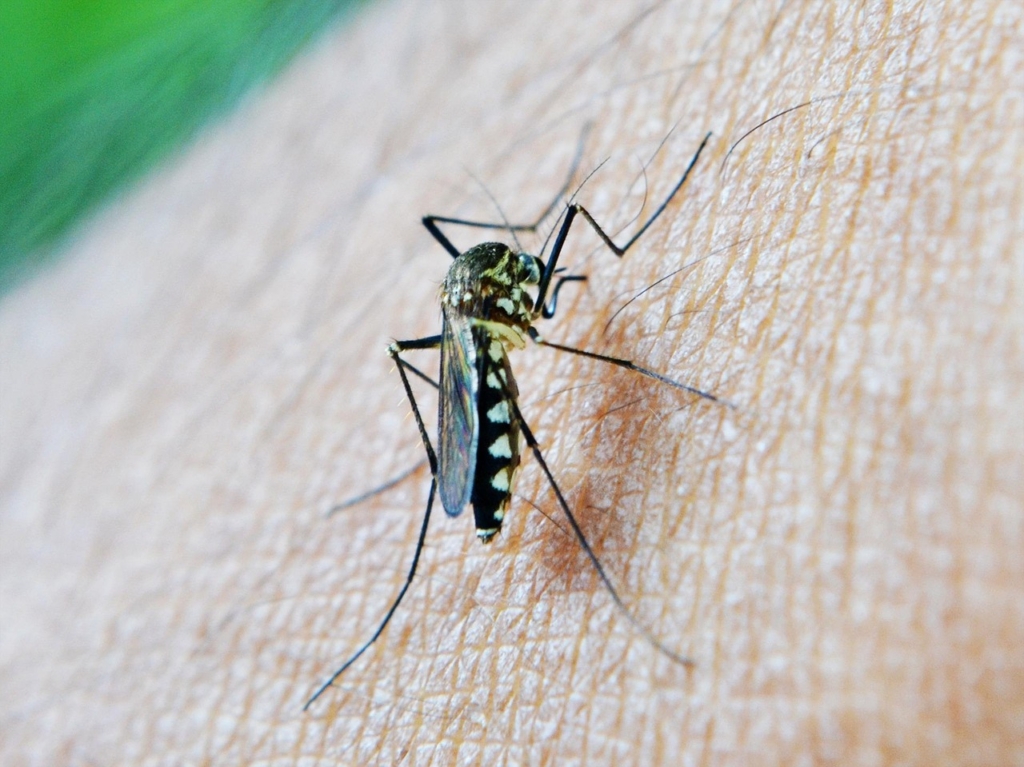
  • The importance of mosquito control

    New Jersey is reminding residents why mosquito populations must be controlled and the risk of disease from bites.

    Foremost is the need to eliminate standing water that can become breeding grounds for the insect. Recent wet weather across the state has produced an abundance of larval pools for some mosquito species, resulting in an increase in local nuisance mosquito complaints to county agencies.

    As peak mosquito season gets underway, taking common-sense steps to reduce insect populations will help protect public health and bolster the work of the state’s Mosquito Control Commission.

    “New Jersey’s Mosquito Control Commission works with the county-level commissions to ensure best practices statewide in combatting the nuisances and risks that result from breeding mosquitoes,” explained Department of Environmental Protection Commissioner Shawn M. LaTourette.

    The state’s mosquito control agencies use a variety of methods to combat the insect, including public- awareness campaigns, targeted larval habitat source reduction programs, use of natural predators such as mosquito-eating fish and application of the federal and state-approved insecticides by ground and aerial means.

    Removing larval pools and eliminating mosquito breeding grounds is important to help reduce the risk of mosquito bites, which can spread vector-borne illnesses such as West Nile Virus (WNV), Eastern Equine Encephalitis (EEE) and Jamestown Canyon Virus (JCV).

    Mosquito-borne threats

    West Nile virus is the leading mosquito-borne disease in New Jersey. In 2024, 41 residents were reported to have it, with eight fatalities. EEE is less common than the virus, but is the most severe mosquito-borne disease transmitted in New Jersey. JCV is found throughout much of the country, but most cases are largely reported from the upper Midwest, according to the Centers for Disease Control.

    Most people infected with WNV or EEE have no symptoms or will experience mild illness that can include flu-like fever, vomiting or diarrhea and sometimes a rash. While rare, some people will develop severe neurological illness, including meningitis or encephalitis. Other symptoms include high fever, stiff neck, mental confusion or disorientation, seizures and paralysis.

    Common symptoms of JCV are fever, headache and fatigue, but the virus can also cause severe encephalitis, or brain inflammation. There are no specific vaccines or medications to prevent or treat it. There also are no specific treatments or vaccines for WNV or EEE. Those 55 years and older are at greatest risk of severe illness and early symptoms may be confused with COVID or several other common viral illnesses. Blood tests are needed to confirm a diagnosis.

    Prevention tips

    The best way to prevent mosquito bites and illnesses is to do the following:

    • Use EPA-registered insect repellents when outdoors and wear protective clothing.
    • Empty water from flowerpots, pet food and water dishes, birdbaths, swimming pool covers, buckets, barrels and trash cans at least once or twice a week.
    • Check for and remove any containers or trash that may be difficult to see, such as under bushes and homes or around building exteriors.
    • Dispose of unused tin cans, plastic containers, ceramic pots or similar water-holding containers that have accumulated on your property.
    • Drill holes in the bottom and elevate recycling containers left outdoors.
    • Repair and clean storm-damaged roof gutters, especially if leaves from surrounding trees tend to clog drains. Gutters can produce millions of mosquitoes each season.
    • Turn over plastic wading pools and wheelbarrows when not in use.
    • Avoid allowing water to stagnate in bird baths.
    • Aerate ornamental pools or stock them with fish. Water gardens become major mosquito producers if they stagnate.
    • Clean and chlorinate swimming pools, including those not in use. An untended swimming pool can produce enough mosquitoes to result in neighborhood-wide complaints. Mosquitoes can also develop in water that collects on pool covers.
    • Stay in air-conditioned places or rooms with window screens that prevent mosquito access.

    If a mosquito problem remains after taking the above steps, call your county mosquito control agency and ask for assistance.

    To learn more about the state’s Mosquito Control Commission and for links to county mosquito agencies, visit dep.nj.gov/njfw/councils-and-committees/state-mosquito-control-commission.