Tag: friends for barclay farmstead

  • How 50 years of Friends made Barclay Farmstead

    Barclay Farmstead would not be what it is today without friends.

    One of the township’s most prominent historic and recreational sites came to be because of the Friends of Barclay Farmstead, an institution for decades. After the township purchased the farmstead as a historic site in 1975, the Friends restored the property’s home and eventually offered educational programs and community events.

    To mark its 50th anniversary, the Friends hosted a celebration at the farmstead on Nov. 15, enabling guests to see the farmstead’s holiday home decorations. To accommodate the 100 people who attended – too many for the farmstead house alone – a heated tent was set up on the lawn outside.

    Some of the original Friends were on hand, while the children and spouses of other members who couldn’t attend took their places.

    Megan Brown is the recreation manager for the township’s recreation department, under which care of the farmstead falls.

    “There was a lot of reconnection and just excited to be back together kind of feelings,” she said of the celebration.

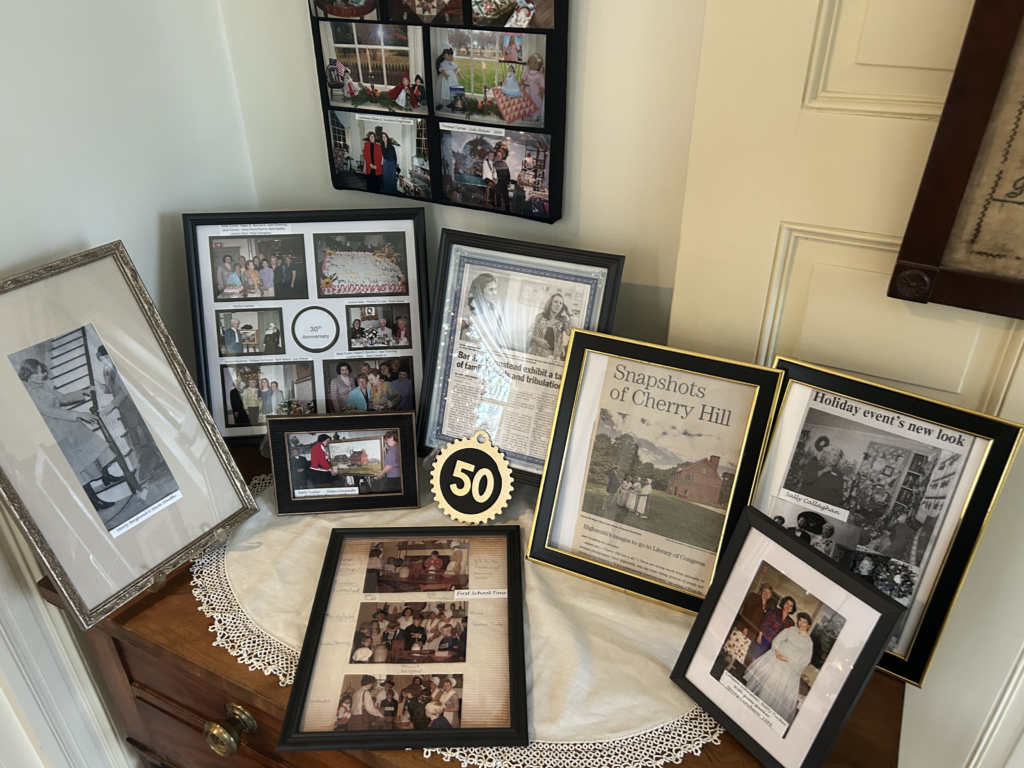
    In addition to the holiday decor, the house featured photos of the Barclay Farmstead when the Friends first began restoration efforts and through the last five decades. Holiday tours took place through November.
    Abigail Twiford/The Sun
    The Friends of Barclay Farmstead were shown in photos through the years at the group’s anniversary celebration on Nov. 15.

    “There was a lot of just nostalgia in the display of the last 50 years and the people who have made an impact and telling some of the story of when the group of people kind of rallied around rehabbing the house and making it what it is today,” Brown explained.

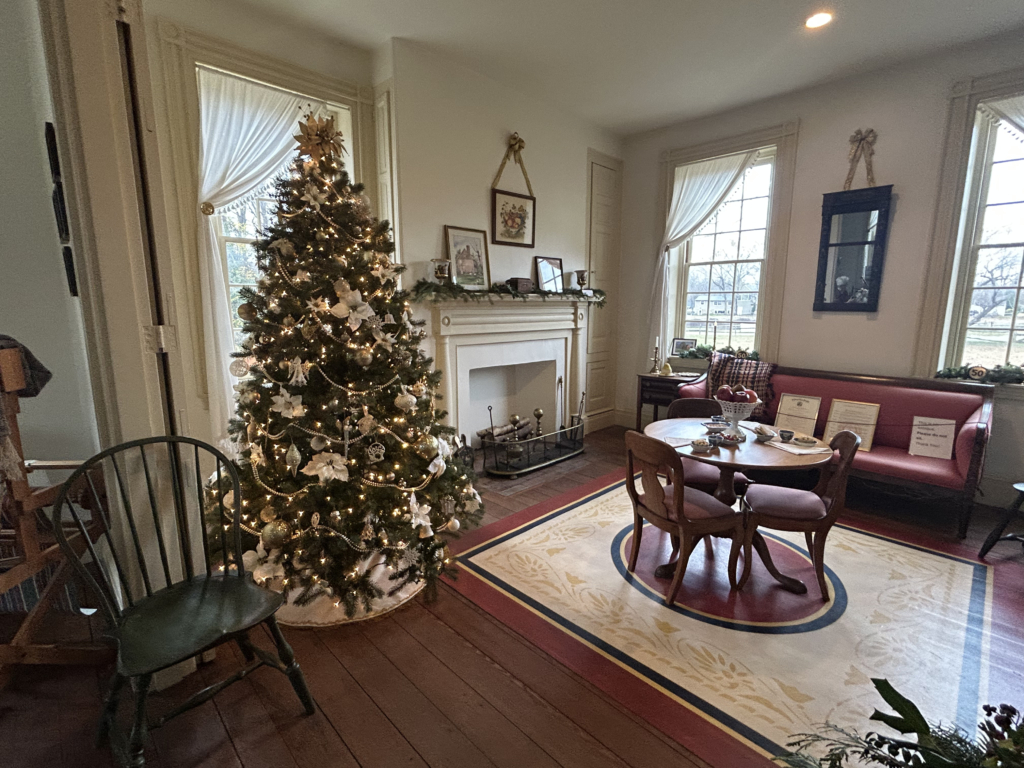
    But this year’s Christmas decorations were less important than allowing visitors to see how the house looks the rest of the year.

    “They’re understated this year,” noted Betty Eigenrauch, a Friends volunteer. “We wanted to have a tree up, but it’s not the main thing in the room this year …”
     

    Abigail Twiford/The Sun
    The living area of the Barclay Farmstead’s historic house is decorated for the holiday season.

    Photos from the Friends’ anniversary celebration remain on display for anyone who would like to learn about the efforts that went into creating the historical landmark known today as the Barclay Farmstead.

    “It’s just a great testament to the impact of community volunteerism,” Brown observed. “You know that the farmstead would not be what it is today without that organization.”

  • ‘Treasure in Barclay’ hosts farmstead open house

    The Barclay Farmstead holds an open house on the first Sunday of every month to educate the community about its history and surrounding land.

    The house is more than two centuries old, built by Quaker farmer Joseph Thorn in 1816 on a 32-acre property. The site was originally 168 acres, but over the years, families who lived there sold off portions.

    The land and the farmhouse are now owned by the township, but the historical artifacts and furniture are owned by the Friends of the Barclay Farmstead, a volunteer-run nonprofit that promotes historic, educational and interpretive activities there. The organization has operated for 50 years with activities that promote the preservation and restoration of the farmstead, its outbuildings and grounds.

    The site also features preserved nature trails and community gardens to continue its legacy as a farm. Tours are free for Cherry Hill residents, children under 12 and members of the Friends. Non-residents are charged $5. Farmstead tours are also offered to all the fifth graders in the township, with volunteers dressed in historically accurate costumes that are also displayed throughout the home.

    Betty Eigenrauch is a member of the Friends and a volunteer who offered tours during the June open house. The monthly events are run by Friends’ volunteers who show the first and second floors of the main building, giving attendees insight into the lives of its former residents. 

    “These people were self-sufficient,” noted Eigenrauch, who gestured at the kitchen fireplace that served as a stove, with dishes, pans and a crane for hanging pots that could be pulled from the flame or pushed over it. “They grew all the food that they ate, for instance. So, the house has no kitchen sink, has no refrigerator.”

    The home’s kitchen fireplace holds a display of dishes, pots and pans that were used to cook over the open fire.

    Eigenrauch also explained the role of the parlor, where families of the past placed more expensive possessions like upholstered furniture and fancy dishware. The family room held handmade toys, wooden furniture and materials for making clothing. 

    The Thorns made their own clothing, using flax for anything close to the body like undergarments and bedsheets, and wood for outer garments.

    “The Quakers don’t believe in slavery or war or any of that,” Eigenrauch offered. ” … They boycotted cotton. So they only used flax and wool.”

    On the home’s second floor, multiple rooms are set up to display bedrooms from different time periods and owners. Dottie Sevast pointed out that the Thorn family would have made their mattresses and pillows by filling a large cloth sack made from flax with hay and placing it over ropes strung across a wooden bed frame. 

    She also described how the Thorns eventually left the property because they couldn’t make the mortgage payments. It was then purchased by the Coopers, a wealthy Quaker family from Camden. Their daughter, Ellen Champion, married Charles Barclay, thus the farmstead’s name. A replica of her wedding dress and one of her portraits is displayed in a bedroom.

    “Back then, they didn’t wear white for weddings and things,” Sevast said. “They wore whatever was their best outfit. This is a replica. We do have the original, but it’s packed away because the sun was damaging it.”

    Sevast also offered the back story on the last person to live in the house, Helen Champion Barclay. She never married or had children, so when she was ready to leave, she sold the home to the township so it could become a museum and remain a farm. 

    “We really have such a treasure here in Barclay,” Sevast offered. “I think the signs on Route 70 have sort of rusted out and things like that. It’s a shame people don’t know that it’s here.”

    Photos by Abigail Twiford
    The front of the Barclay farmhouse on June 1. The structure is more than two centuries old and occupies 32 acres.