Author: atwiford

  • How 50 years of Friends made Barclay Farmstead

    Barclay Farmstead would not be what it is today without friends.

    One of the township’s most prominent historic and recreational sites came to be because of the Friends of Barclay Farmstead, an institution for decades. After the township purchased the farmstead as a historic site in 1975, the Friends restored the property’s home and eventually offered educational programs and community events.

    To mark its 50th anniversary, the Friends hosted a celebration at the farmstead on Nov. 15, enabling guests to see the farmstead’s holiday home decorations. To accommodate the 100 people who attended – too many for the farmstead house alone – a heated tent was set up on the lawn outside.

    Some of the original Friends were on hand, while the children and spouses of other members who couldn’t attend took their places.

    Megan Brown is the recreation manager for the township’s recreation department, under which care of the farmstead falls.

    “There was a lot of reconnection and just excited to be back together kind of feelings,” she said of the celebration.

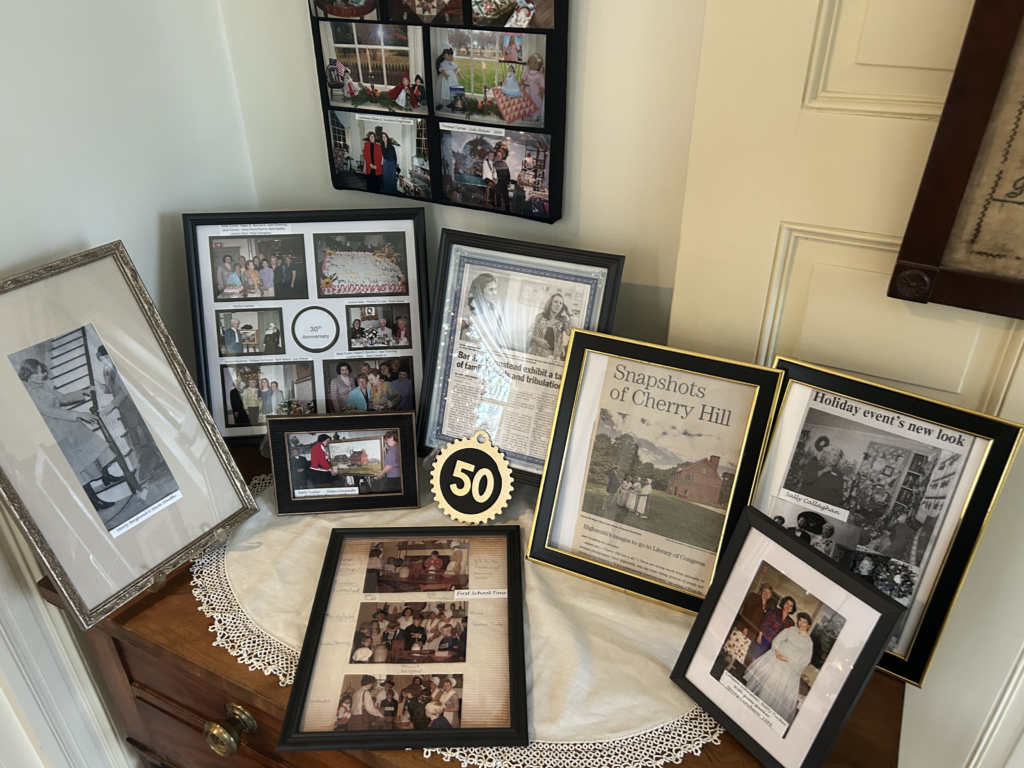
    In addition to the holiday decor, the house featured photos of the Barclay Farmstead when the Friends first began restoration efforts and through the last five decades. Holiday tours took place through November.
    Abigail Twiford/The Sun
    The Friends of Barclay Farmstead were shown in photos through the years at the group’s anniversary celebration on Nov. 15.

    “There was a lot of just nostalgia in the display of the last 50 years and the people who have made an impact and telling some of the story of when the group of people kind of rallied around rehabbing the house and making it what it is today,” Brown explained.

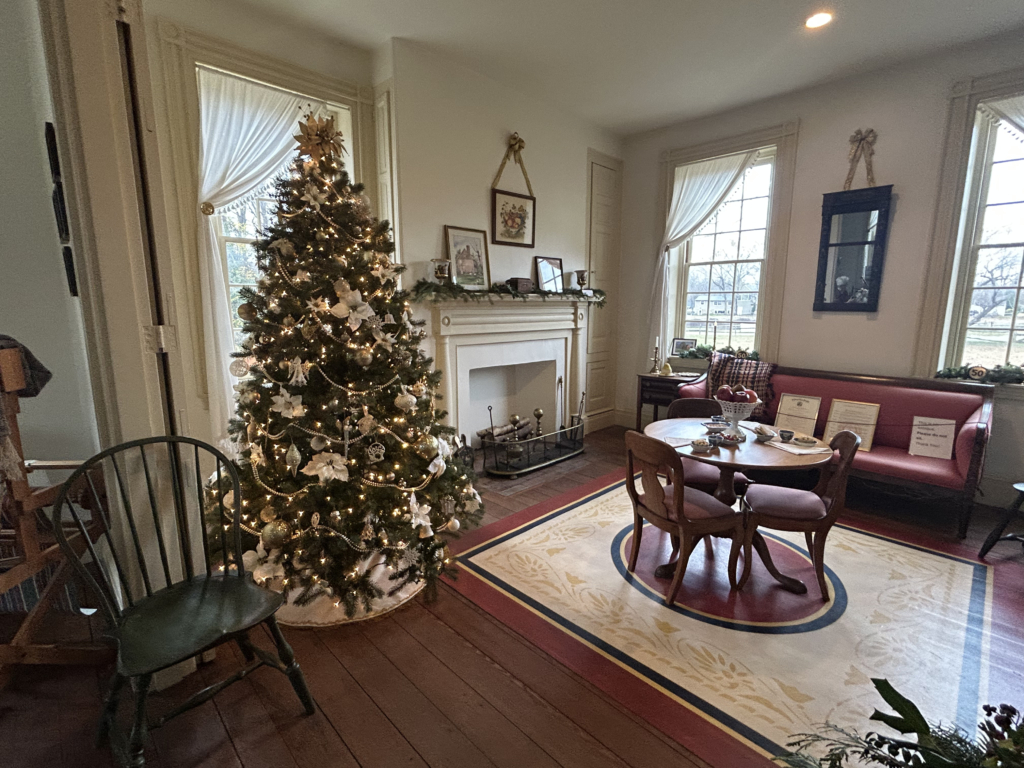
    But this year’s Christmas decorations were less important than allowing visitors to see how the house looks the rest of the year.

    “They’re understated this year,” noted Betty Eigenrauch, a Friends volunteer. “We wanted to have a tree up, but it’s not the main thing in the room this year …”
     

    Abigail Twiford/The Sun
    The living area of the Barclay Farmstead’s historic house is decorated for the holiday season.

    Photos from the Friends’ anniversary celebration remain on display for anyone who would like to learn about the efforts that went into creating the historical landmark known today as the Barclay Farmstead.

    “It’s just a great testament to the impact of community volunteerism,” Brown observed. “You know that the farmstead would not be what it is today without that organization.”

  • The Indian King Tavern’s Revolutionary War history

    Abigail Twiford/The Sun
    Joella Clamen presented a slide show at the library about the tavern’s role in the Revolutionary War, among its other history.

    As part of its ongoing series to mark the upcoming 250th anniversary of America’s founding, the library hosted a Nov. 18 presentation on the Indian King Tavern.

    The grant-funded project “U.S. at 250: South Jersey and the Revolution” is a year-long exploration of area history and its role in the nation’s beginning. The library talk focused on the tavern’s Revolutionary War history.

    Joella Clamen, museum interpreter of the historic site, told stories and presented a slide show with historical photos, illustrations and maps to help explain the tavern’s past. Clamen began by noting that the tavern is located on what is now Kings Highway – then known as Salem-Burlington Road – and had an important connection to South Jersey’s first two English settlements.

    The tavern was operated by widow Mary Creighton, who got help during the war from her second husband Hugh and two sons. Clamen explained how at the time, the role of tavern keeper was often filled by women, given the job’s focus on homemaking skills.

    “You can work from home if you’re running a tavern,” she remarked.

    Creighton got financial and other support from Haddonfield to buy the tavern and obtain her license to run it. 

    “They actually had pretty strong social welfare laws …” Clamen noted. “Taxpayers of the town put money into a group called the Guardians of the Poor, who then had to support impoverished people. So it’s really not in anyone’s interest for a widow who’s in a vulnerable situation and might have fallen into poverty. It’s actually in everyone’s interest for her to be gainfully employed.”

    Clamen also noted that some of the tavern’s workers were enslaved and pointed to the impact slavery had on social standing at the time, though the borough’s largely Quaker population was against it.

    “If you did not have a plan to free them (slaves),” she said, “then you could be what was called disowned from the meeting.”

    Quakers who supported the revolution were also disowned, given the religious group’s pacifist stance on war.

    “They not only said that they didn’t want people from their religious committee to bear arms, they said, ‘We don’t support this revolution,’” Clamen related.

    She also noted that Haddonfield was chosen as the revolutionary government of New Jersey’s headquarters – after the imprisonment of the British-appointed leadership – but there are no records of why. A room at the tavern, however, became the location for the young government’s meetings.

    “This is why some people say New Jersey became a state there,” Clamen related.

    The revolutionary government eventually left the borough after the British took control of Philadelphia in the fall of 1777, so its headquarters wouldn’t be close to enemy troops. But Haddonfield’s role in the revolution did not end there: When enemy soldiers left Philadelphia later in the conflict, they marched through the town to retreat.

    Following the war, Quakers who were disowned by their church continued to practice their religion and became the Society of Free Quakers in Philadelphia. 

    Clamen also addressed how Haddonfield native Timothy Matlack Jr., son of one of the tavern’s first owners, was known for his penmanship, so he was chosen to create a handwritten copy of the Declaration of Independence.

    “So when somebody tells you, ‘Thomas Jefferson wrote the declaration,’” Cleman pointed out, “yeah, but he didn’t hand write the declaration.”

    Clamen ended her talk by discussing how the tavern became a museum in 1903, after the Daughters of the American Revolution lobbied the state to buy the building. It has been a museum since, with a bronze plaque outside to commemorate its important role in the Revolutionary War.

  • The Indian King Tavern’s Revolutionary War history

    Abigail Twiford/The Sun
    Joella Clamen presented a slide show at the library about the tavern’s role in the Revolutionary War, among its other history.

    As part of its ongoing series to mark the upcoming 250th anniversary of America’s founding, the library hosted a Nov. 18 presentation on the Indian King Tavern.

    The grant-funded project “U.S. at 250: South Jersey and the Revolution” is a year-long exploration of area history and its role in the nation’s beginning. The library talk focused on the tavern’s Revolutionary War history.

    Joella Clamen, museum interpreter of the historic site, told stories and presented a slide show with historical photos, illustrations and maps to help explain the tavern’s past. Clamen began by noting that the tavern is located on what is now Kings Highway – then known as Salem-Burlington Road – and had an important connection to South Jersey’s first two English settlements.

    The tavern was operated by widow Mary Creighton, who got help during the war from her second husband Hugh and two sons. Clamen explained how at the time, the role of tavern keeper was often filled by women, given the job’s focus on homemaking skills.

    “You can work from home if you’re running a tavern,” she remarked.

    Creighton got financial and other support from Haddonfield to buy the tavern and obtain her license to run it. 

    “They actually had pretty strong social welfare laws …” Clamen noted. “Taxpayers of the town put money into a group called the Guardians of the Poor, who then had to support impoverished people. So it’s really not in anyone’s interest for a widow who’s in a vulnerable situation and might have fallen into poverty. It’s actually in everyone’s interest for her to be gainfully employed.”

    Clamen also noted that some of the tavern’s workers were enslaved and pointed to the impact slavery had on social standing at the time, though the borough’s largely Quaker population was against it.

    “If you did not have a plan to free them (slaves),” she said, “then you could be what was called disowned from the meeting.”

    Quakers who supported the revolution were also disowned, given the religious group’s pacifist stance on war.

    “They not only said that they didn’t want people from their religious committee to bear arms, they said, ‘We don’t support this revolution,’” Clamen related.

    She also noted that Haddonfield was chosen as the revolutionary government of New Jersey’s headquarters – after the imprisonment of the British-appointed leadership – but there are no records of why. A room at the tavern, however, became the location for the young government’s meetings.

    “This is why some people say New Jersey became a state there,” Clamen related.

    The revolutionary government eventually left the borough after the British took control of Philadelphia in the fall of 1777, so its headquarters wouldn’t be close to enemy troops. But Haddonfield’s role in the revolution did not end there: When enemy soldiers left Philadelphia later in the conflict, they marched through the town to retreat.

    Following the war, Quakers who were disowned by their church continued to practice their religion and became the Society of Free Quakers in Philadelphia. 

    Clamen also addressed how Haddonfield native Timothy Matlack Jr., son of one of the tavern’s first owners, was known for his penmanship, so he was chosen to create a handwritten copy of the Declaration of Independence.

    “So when somebody tells you, ‘Thomas Jefferson wrote the declaration,’” Cleman pointed out, “yeah, but he didn’t hand write the declaration.”

    Clamen ended her talk by discussing how the tavern became a museum in 1903, after the Daughters of the American Revolution lobbied the state to buy the building. It has been a museum since, with a bronze plaque outside to commemorate its important role in the Revolutionary War.

  • How art went to school – for 50 years

    Abigail Twiford/The Sun
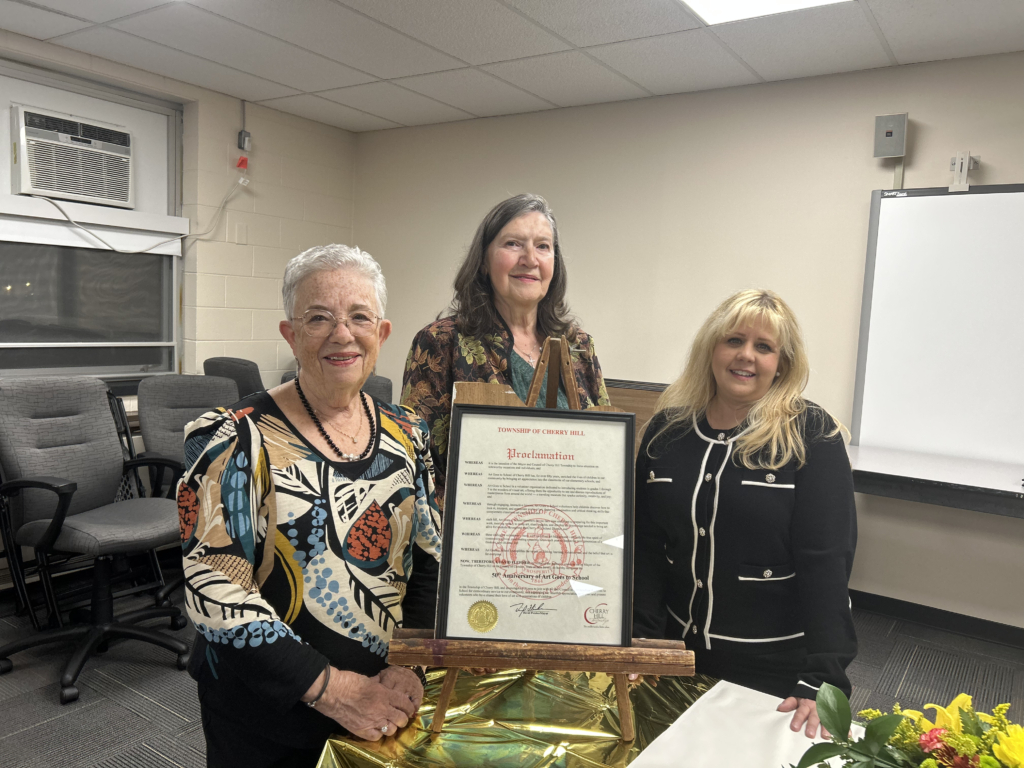
    Libby DeLuca (left to right), Mary Johnston and Amy Bash display the proclamation from Art Goes to School’s township chapter.

    Art Goes to School is a Delaware Valley nonprofit whose volunteers bring art appreciation classes to public elementary schools throughout the region.

    While the organization has been around for 66 years, it’s been an institution in township schools for decades. The chapter celebrated its 50th anniversary in Cherry Hill with a reception on Nov. 14 at the Arthur Lewis Administration Building.

    Mayor Dave Fleisher presented a proclamation to Art Goes to School volunteers for sharing their love of the arts with students. The nonprofit’s grants administrator Amy Bash noted the mayor’s words of appreciation for the volunteers and the work that they do.

    During its township history, the organization has educated hundreds of children every year.

    “Besides celebrating 50 years, we’ve taught art appreciation to literally tens of thousands of children over 50 years,” Bash explained. “Sometimes kindergarten, first through sixth grade, at no cost to the resources of the school. We don’t impact their budget, it’s all free.

    “We’re all volunteers and we’re a nonprofit organization.”

    Superintendent Dr. Kwame Morton also attended the anniversary celebration with members of the Art Goes to School chapter and elementary-school art teachers and principals. Organization president Mary Johnston was also on hand.

    A cake that read, “AGTS Cherry Hill Celebrating 50 Years,” was served to guests, and a toast to the group’s achievements and long legacy was made with sparkling cider.

    “It’s been a really nice celebration,” Bash said. “Really, very nice … We’re just very grateful that superintendent Morton and Mayor Fleischer are so supportive of letting us continue to teach our appreciation to the elementary-school kids. We spend months preparing for our portfolios.”

    Cherry Hill chapter chair Libby DeLuca and Bash presented special certificates recognizing Art Goes to School veterans who have been part of the organization for five, 10, 15, 20 and 40 years each. One member, Linda Markoff, has put in 40 years.

    “We have a lot of pride, a lot of longevity, a lot of dedication for 50 years,” Bash pointed out. “This is amazing.”

  • How art went to school – for 50 years

    Abigail Twiford/The Sun
    Libby DeLuca (left to right), Mary Johnston and Amy Bash display the proclamation from Art Goes to School’s township chapter.

    Art Goes to School is a Delaware Valley nonprofit whose volunteers bring art appreciation classes to public elementary schools throughout the region.

    While the organization has been around for 66 years, it’s been an institution in township schools for decades. The chapter celebrated its 50th anniversary in Cherry Hill with a reception on Nov. 14 at the Arthur Lewis Administration Building.

    Mayor Dave Fleisher presented a proclamation to Art Goes to School volunteers for sharing their love of the arts with students. The nonprofit’s grants administrator Amy Bash noted the mayor’s words of appreciation for the volunteers and the work that they do.

    During its township history, the organization has educated hundreds of children every year.

    “Besides celebrating 50 years, we’ve taught art appreciation to literally tens of thousands of children over 50 years,” Bash explained. “Sometimes kindergarten, first through sixth grade, at no cost to the resources of the school. We don’t impact their budget, it’s all free.

    “We’re all volunteers and we’re a nonprofit organization.”

    Superintendent Dr. Kwame Morton also attended the anniversary celebration with members of the Art Goes to School chapter and elementary-school art teachers and principals. Organization president Mary Johnston was also on hand.

    A cake that read, “AGTS Cherry Hill Celebrating 50 Years,” was served to guests, and a toast to the group’s achievements and long legacy was made with sparkling cider.

    “It’s been a really nice celebration,” Bash said. “Really, very nice … We’re just very grateful that superintendent Morton and Mayor Fleischer are so supportive of letting us continue to teach our appreciation to the elementary-school kids. We spend months preparing for our portfolios.”

    Cherry Hill chapter chair Libby DeLuca and Bash presented special certificates recognizing Art Goes to School veterans who have been part of the organization for five, 10, 15, 20 and 40 years each. One member, Linda Markoff, has put in 40 years.

    “We have a lot of pride, a lot of longevity, a lot of dedication for 50 years,” Bash pointed out. “This is amazing.”