Author: atwiford

  • Board of ed hears latest on budget process

    Cherry Hill Board of Education
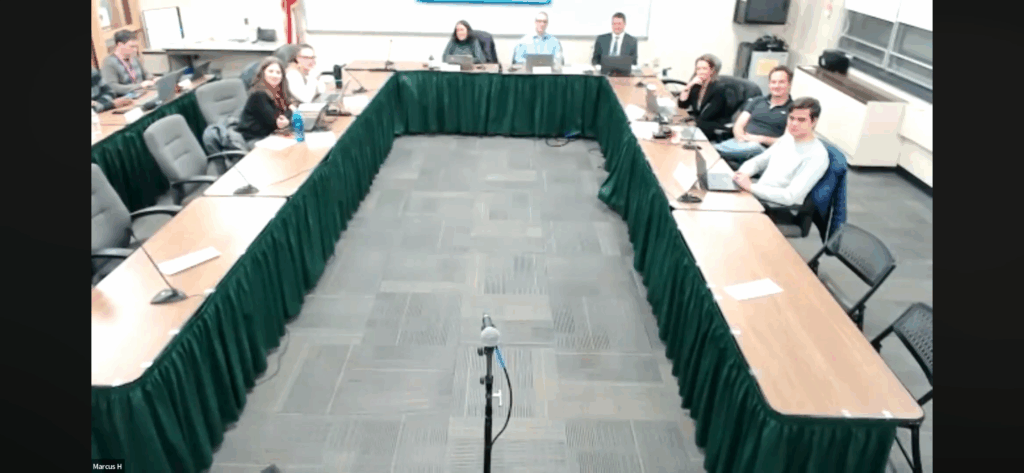
    Board of education members listen to details of the budget for the 2026-’27 school year.

    The township board of education discussed the ongoing process of preparing a 2026-’27 academic year budget at a Dec. 3 meeting.

    Jason Schimpf is the assistant superintendent, business administrator and board secretary responsible for leading the budget preparation process. He presented several slides at the meeting of that process.

    “I’ve continued to make my rounds to each of the schools to meet with their school principals and administrative teams,” he noted. “I really enjoyed those discussions, and I thought, now, consistent with our budget preparation calendar, I would continue to provide some updates at our work sessions as we move through the process here.”

    As schools within the district have until Jan. 16 to justify their budget requests, Schimpf focused primarily on revenue for the meeting. He began with a rundown of the district’s tax levy analysis, which along with the budget fund balance is one of the only pieces of revenue over which the board has control.

    Since there is a 2% cap on the tax levy, that would equate to an additional $4 million in revenue for 2026-’27. The average homeowner in the township would see this impact reflected in a $115 property tax increase. 

    The coming academic year will be the first time since the $300-million bond referendum in 2022 that residents will see a decrease in the principal and interest payments of the bonds. That would continue for the next three fiscal years, translating to a $61 decrease on the debt service side of the budget for the average homeowner.

    “It’ll be a welcome relief having the ability to hopefully or potentially increase the general side of the tax levy to support our operations,” Schimpf pointed out, “while at the same time offsetting that increase with the decrease on the debt service side of things.”

    The district also has about $3.3 million in banked cap – or unused taxing authority – that can be utilized for larger tax increases without a public vote. Unused funds will expire during the next academic year if left unallocated. The tax impact of the banked cap is estimated to be around $97, which would translate to a net increase of $151 in taxes on the average assessed home.

    Schimpf also touched on state aid, though with a new governor taking office in January, that funding is unknown. Some of Gov. Phil Murphy’s budget legislation changes are not permanent, and governor-elect Mikie Sherrill’s plans for those have not been made public.

    One of Murphy’s policies was limiting decreases in state aid to 3% and increases to 6%. 

    “There’s still the potential there, without those caps, that the district could be looking at another substantial state aid cut,” said Schimpf.

    No definitive answer to whether those caps will remain in place will be available to the district until Feb. 26, after Sherrill approves a budget. 

    Schimpf also discussed the district’s fund balance and the different categories in that amount. The unassigned balance functions as the district’s savings account, estimated to be at about $4 million by the end of this school year. Schimpf estimated that in that same time, the fund balance would have about $5 million in designated revenue and $3.8 million in capital reserve, with no restricted funding in the balance.

    The public hearing and final adoption of a budget for 2026-’27 will take place on April 28.
  • Budget plan touches on the nation’s rising costs

    Courtesy of Cherry Hill Township
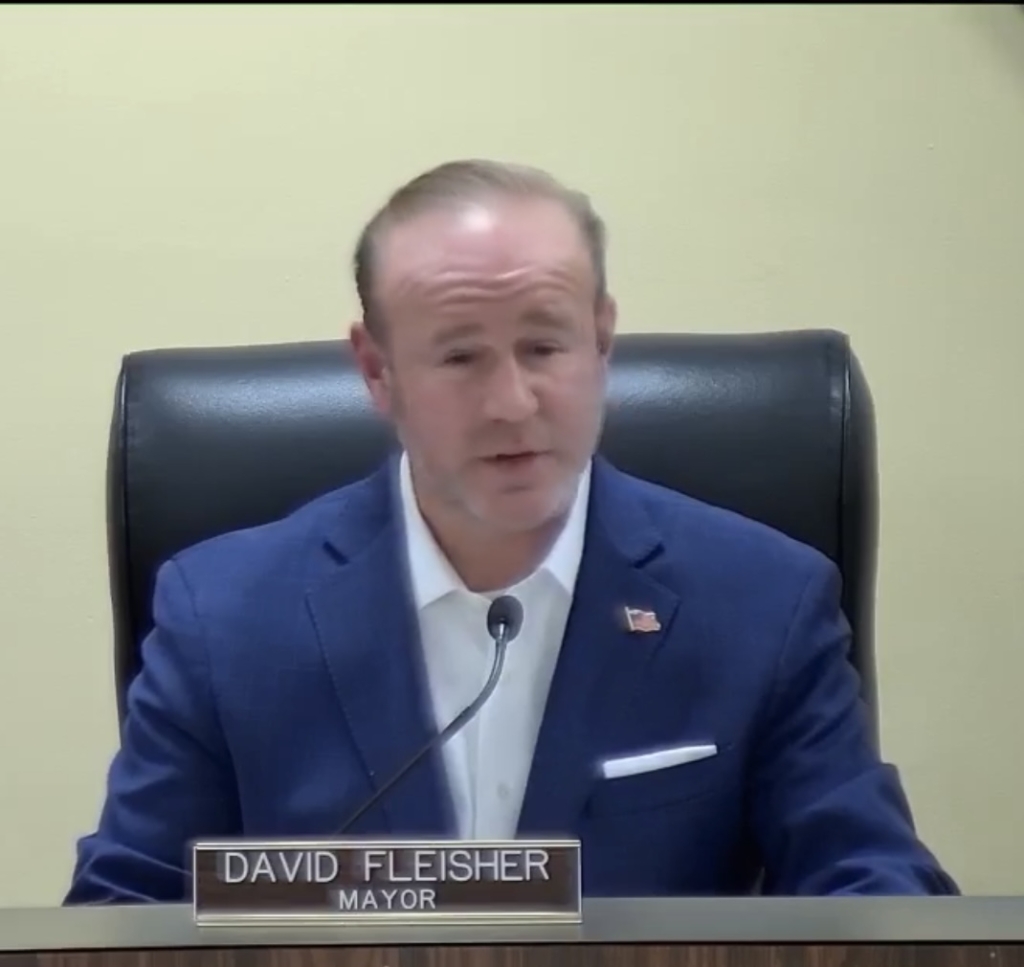
    Mayor Dave Fleisher discussed the proposal during a special township council meeting on Nov. 20.

    Mayor Dave Fleisher and council have introduced a new 2026 municipal budget addressing increased costs for township services that mirror rising costs nationwide.

    “This budget also reflects the reality of rising costs outside of our control,” the mayor said, “just as families across the nation are experiencing in their own households: the soaring cost of energy, increasing health-care costs, inflation, tariffs, along with trash and recycling collection and disposal, all which significantly impact our budget.”

    Fleisher then explained in detail the increased cost of township trash collection and disposal. After a competitive bid process, the cost of the services will increase by $1.4 million beginning in January, with additional increases annually for the next four years.

    That translates to a cumulative cost of $47.8 million for trash collection and disposal over the next five years, an increase of $12.4 million – or 34.9% – compared with the previous five-year period.

    “As you see, trash collection, a critical service for our community, has a serious negative impact on the township budget,” Fleisher noted.

    The proposed financial plan also includes a 5-cent increase in the municipal tax rate; for the average township homeowner, that translates to $31.50 more in quarterly property taxes.

    The budget also invests in new technology for the police department and in the upgrade and repair of more than 20 miles of township roads. Improvements to township parks, recreation spaces and historic sites are also included.

    “This budget puts public safety first, makes critical investments in neighborhoods, is fiscally responsible, plans for the future and is focused on what our residents have told us is most important,” Fleisher emphasized.

    The proposed budget – its total as yet unknown – will appear on the township website before a hearing is held for residents to make their voices heard on the plan. That session will be held on Monday, Dec. 22, in person and via Zoom. The next regular council meeting will be held on Monday.

    In other meeting business, council appointed Aidan Kerr and Patrick Gaffney to serve as Class II SLEO (Special Law Enforcement Officers).  

  • Budget plan touches on the nation’s rising costs

    Courtesy of Cherry Hill Township
    Mayor Dave Fleisher discussed the proposal during a special township council meeting on Nov. 20.

    Mayor Dave Fleisher and council have introduced a new 2026 municipal budget addressing increased costs for township services that mirror rising costs nationwide.

    “This budget also reflects the reality of rising costs outside of our control,” the mayor said, “just as families across the nation are experiencing in their own households: the soaring cost of energy, increasing health-care costs, inflation, tariffs, along with trash and recycling collection and disposal, all which significantly impact our budget.”

    Fleisher then explained in detail the increased cost of township trash collection and disposal. After a competitive bid process, the cost of the services will increase by $1.4 million beginning in January, with additional increases annually for the next four years.

    That translates to a cumulative cost of $47.8 million for trash collection and disposal over the next five years, an increase of $12.4 million – or 34.9% – compared with the previous five-year period.

    “As you see, trash collection, a critical service for our community, has a serious negative impact on the township budget,” Fleisher noted.

    The proposed financial plan also includes a 5-cent increase in the municipal tax rate; for the average township homeowner, that translates to $31.50 more in quarterly property taxes.

    The budget also invests in new technology for the police department and in the upgrade and repair of more than 20 miles of township roads. Improvements to township parks, recreation spaces and historic sites are also included.

    “This budget puts public safety first, makes critical investments in neighborhoods, is fiscally responsible, plans for the future and is focused on what our residents have told us is most important,” Fleisher emphasized.

    The proposed budget – its total as yet unknown – will appear on the township website before a hearing is held for residents to make their voices heard on the plan. That session will be held on Monday, Dec. 22, in person and via Zoom. The next regular council meeting will be held on Monday.

    In other meeting business, council appointed Aidan Kerr and Patrick Gaffney to serve as Class II SLEO (Special Law Enforcement Officers).  

  • District hears concerns on enrollment balancing

    As the township grows, so does its student population. Most concerning is the expected increase in enrollment at the district’s 12 elementary schools.

    The issue became apparent after a March 2024 demographic study that identified five elementary schools at risk of overcrowding by the 2028-’29 school year: Clara Barton, Joyce Kilmer, Richard Stockton, Horace Mann and Woodcrest.

    To begin addressing that, the district recently held three community discussions on what is called elementary enrollment balancing, and elicited input from parents and the community. The sessions were held at Cherry Hill East and West; the third was virtual.

    Superintendent Dr. Kwame Morton took part in the virtual panel discussion, as did several members of the school board and the district’s director of secondary education, Dr. Neil Burti.

    “So the true effort, or true work,” said Morton, “really has to do with us ensuring that we’re ready for the future, while also maintaining high quality of experience for students and high quality of education.”

    The demographic study assumed all classes would be at full capacity of 22 to 26 students, though many of them – especially special-education classes – have significantly lower capacity caps, meaning the overcrowding would be more significant than expected.

    Geographic considerations – along with maximizing transportation efficiency – will be major considerations in any long-term solution to balance enrollment, according to the district.

    “We are absolutely considering the impact on students and families,” assured Morton, “and ultimately, our goal is to minimize disruptions to any of our students and any of our families, while also addressing the present needs that we have and the future needs that we have.”

    No decisions were made during the three meetings, but possible solutions discussed included converting the Lewis Administration Building into another elementary school, grouping schools by proximity and revising school boundaries.

    Concerns were also raised by parents of multiple children who have one student already in an elementary school and would like the district to ensure siblings can remain together.

    “Our goal to the end of this process is to try to create a plan that disrupts the district as little as possible,” noted board of education president Gina Winters.

    Further discussions are expected – including sessions for the public – but dates have yet to be planned.

  • District hears concerns on enrollment balancing

    As the township grows, so does its student population. Most concerning is the expected increase in enrollment at the district’s 12 elementary schools.

    The issue became apparent after a March 2024 demographic study that identified five elementary schools at risk of overcrowding by the 2028-’29 school year: Clara Barton, Joyce Kilmer, Richard Stockton, Horace Mann and Woodcrest.

    To begin addressing that, the district recently held three community discussions on what is called elementary enrollment balancing, and elicited input from parents and the community. The sessions were held at Cherry Hill East and West; the third was virtual.

    Superintendent Dr. Kwame Morton took part in the virtual panel discussion, as did several members of the school board and the district’s director of secondary education, Dr. Neil Burti.

    “So the true effort, or true work,” said Morton, “really has to do with us ensuring that we’re ready for the future, while also maintaining high quality of experience for students and high quality of education.”

    The demographic study assumed all classes would be at full capacity of 22 to 26 students, though many of them – especially special-education classes – have significantly lower capacity caps, meaning the overcrowding would be more significant than expected.

    Geographic considerations – along with maximizing transportation efficiency – will be major considerations in any long-term solution to balance enrollment, according to the district.

    “We are absolutely considering the impact on students and families,” assured Morton, “and ultimately, our goal is to minimize disruptions to any of our students and any of our families, while also addressing the present needs that we have and the future needs that we have.”

    No decisions were made during the three meetings, but possible solutions discussed included converting the Lewis Administration Building into another elementary school, grouping schools by proximity and revising school boundaries.

    Concerns were also raised by parents of multiple children who have one student already in an elementary school and would like the district to ensure siblings can remain together.

    “Our goal to the end of this process is to try to create a plan that disrupts the district as little as possible,” noted board of education president Gina Winters.

    Further discussions are expected – including sessions for the public – but dates have yet to be planned.

  • How 50 years of Friends made Barclay Farmstead

    Barclay Farmstead would not be what it is today without friends.

    One of the township’s most prominent historic and recreational sites came to be because of the Friends of Barclay Farmstead, an institution for decades. After the township purchased the farmstead as a historic site in 1975, the Friends restored the property’s home and eventually offered educational programs and community events.

    To mark its 50th anniversary, the Friends hosted a celebration at the farmstead on Nov. 15, enabling guests to see the farmstead’s holiday home decorations. To accommodate the 100 people who attended – too many for the farmstead house alone – a heated tent was set up on the lawn outside.

    Some of the original Friends were on hand, while the children and spouses of other members who couldn’t attend took their places.

    Megan Brown is the recreation manager for the township’s recreation department, under which care of the farmstead falls.

    “There was a lot of reconnection and just excited to be back together kind of feelings,” she said of the celebration.

    In addition to the holiday decor, the house featured photos of the Barclay Farmstead when the Friends first began restoration efforts and through the last five decades. Holiday tours took place through November.

    Abigail Twiford/The Sun
    The Friends of Barclay Farmstead were shown in photos through the years at the group’s anniversary celebration on Nov. 15.

    “There was a lot of just nostalgia in the display of the last 50 years and the people who have made an impact and telling some of the story of when the group of people kind of rallied around rehabbing the house and making it what it is today,” Brown explained.

    But this year’s Christmas decorations were less important than allowing visitors to see how the house looks the rest of the year.

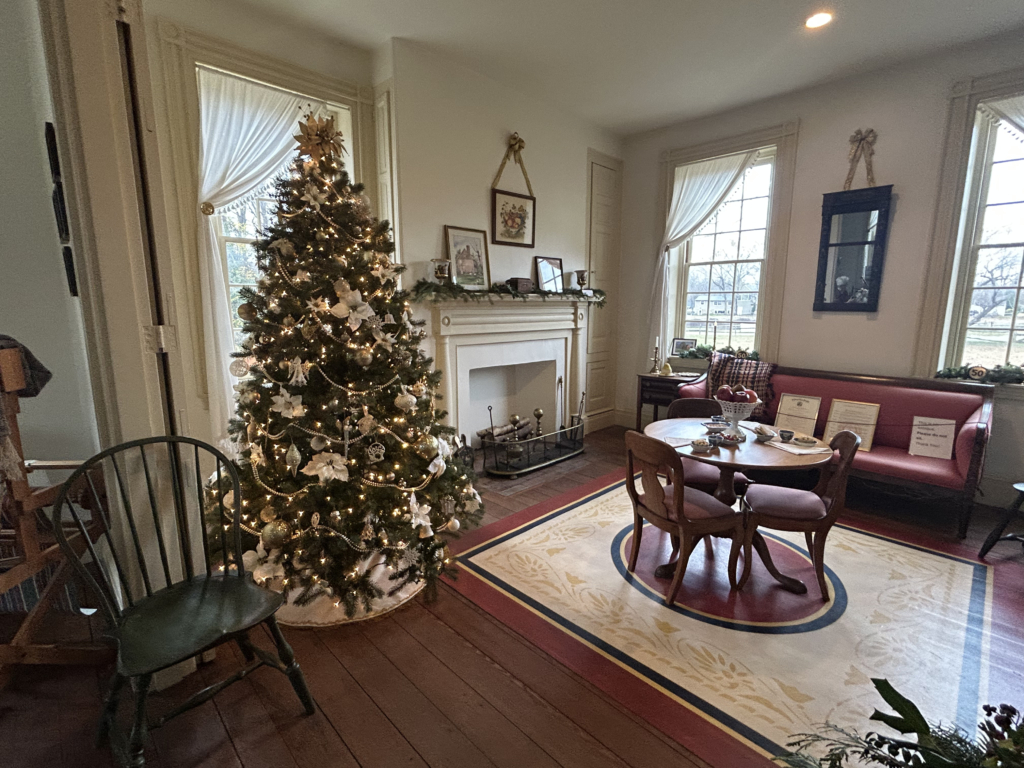
    “They’re understated this year,” noted Betty Eigenrauch, a Friends volunteer. “We wanted to have a tree up, but it’s not the main thing in the room this year …”


    Abigail Twiford/The Sun
    The living area of the Barclay Farmstead’s historic house is decorated for the holiday season.

    Photos from the Friends’ anniversary celebration remain on display for anyone who would like to learn about the efforts that went into creating the historical landmark known today as the Barclay Farmstead.

    “It’s just a great testament to the impact of community volunteerism,” Brown observed. “You know that the farmstead would not be what it is today without that organization.”