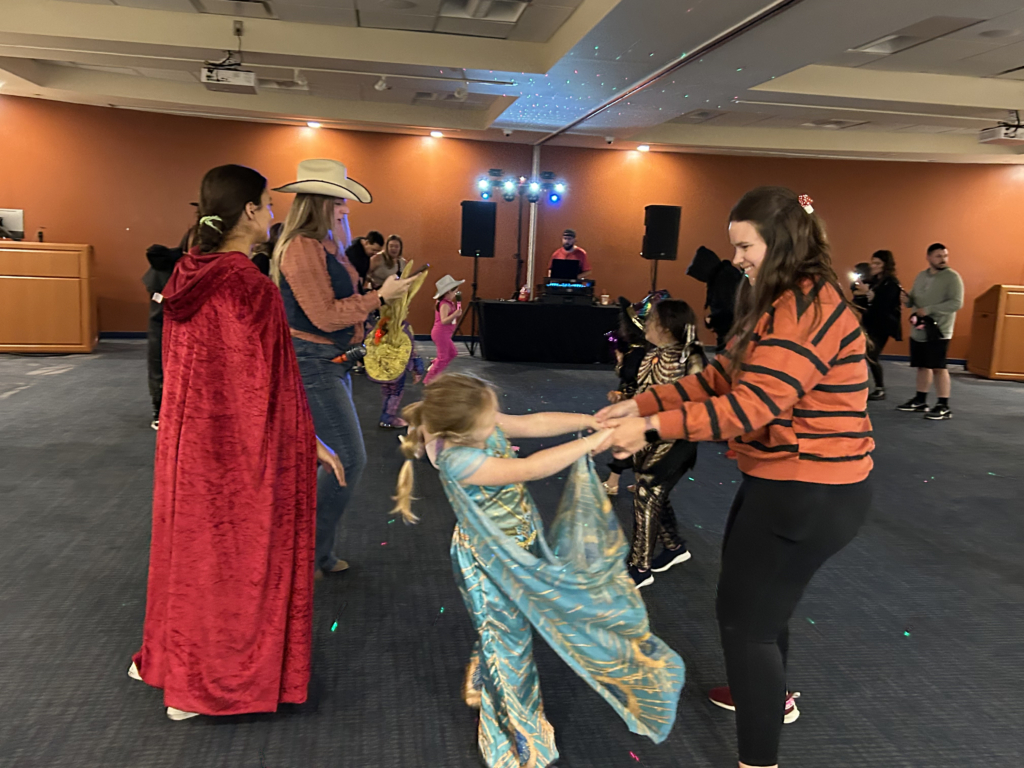
Party-goers spent some after hours at the library on Oct. 3 for a family costume party and fundraiser.
The entry fee of $10 a person enabled the library to raise funds for itself. Meredith Meyer, its volunteer coordinator, helped plan the event, first organized two years ago.
“We just wanted to give the kids something fun to do while raising a smidge of money,” she said. “Everybody who was there had a blast. Everybody that walked out the door said, ‘Oh my gosh, thank you. We had a great time.’
“It’s always cute to see all the kids in costumes, and sometimes the parents get involved, which is fun, too.”
Happy kids received boxes of candy as prizes during the library’s costume party for families on Oct. 3.
Children and their parents were encouraged but not required to wear costumes. Some kids showed up in coordinated outfits inspired by Minecraft and the Harry Potter movies. Other adults donned Halloween-themed T-shirts and sweaters, while their children dressed to look like Barbie or Michael Jackson, among others.
Parents and children danced to music from a DJ who also used lights to create an appropriate mood for each song.
Music was provided by a hired DJ, who also controlled colored lights to set the mood for each song and passed out candy to enthusiastic dancers. There were also competitions that gave children the chance to use inflatable musical instruments and microphones to see who could best mimic a real musical performance.
At the end of the night, participants voted on a winner in the kids’ costume contest, with the top three earning the prize of a gift card.
The library will continue its Halloween-themed activities with a costume swap on Wednesday, and trick or treating for children up to age 5.
Sixth-grade students in Cherry Hill continue to learn how to make responsible decisions through the Law Enforcement Against Drugs and Violence (LEAD) program, with its strategies to reduce youthful consumption of alcohol, tobacco and other substances.
Those strategies include enhancing protective factors like student bonding with family and engagement with the school and community.
Township officer Anthony Amato is a certified LEAD instructor who helped bring the program to the township in 2022.
“These things have been proven to help foster development of resiliency in young people who may be at risk for any of those substance abuse or other types of problem behaviors,” he explained. “We try to help foster a learning community where young people are going to be provided with the tools to make healthy independent decisions despite being in adverse conditions.”
The township LEAD program began after Amato and two of his fellow officers attended a training class for certification. At the time – with only three officers instructing classes – there was no way for LEAD to be implemented in the entire district, so it was decided to pilot the program in one grade at one school at a time, starting with Rosa International Middle School.
There are now 15 police instructors who teach the 10-week long course once a week to all district students every fall. Lessons usually last about 50 minutes and are often taught on Thursday mornings, though schedules do shift.
“The curriculum is effective in reducing alcohol, marijuana and tobacco use by students by preparing them to act decisively, refusing, you know, offers for drugs, helping students to recognize what the risks are and how to avoid drug related situations,” said Amato.
The decision to teach the program to sixth graders was a strategic one, as those students often experience high stress in the transition from elementary to middle school. The first LEAD lesson teaches how to set a goal and provides tools on how to avoid drugs and other substances.
“The criteria for setting a goal is, it needs to be personal, possible, positive and specific,” Amato pointed out. “I would say that we’re really trying to give students foundational principles for being successful in life, not just how (or) why you shouldn’t do certain things.
“We’re trying to give you the tools to be successful in everything.”
By the end of this year’s program, about 3,000 township students will have received LEAD instruction.
“My favorite part, easily, is the connection with that particular age group,” Amato emphasized. “I pretty much feel confidently I cannot go anywhere in the entire township without running into somebody who’s been a part of the program.”
Amato stressed that while the goal of LEAD is to reduce substance abuse, its skills can also be applied to other areas in the lives of students.
“The core of the program is just empowering the youth to value their own perceptions and feelings and make choices that support drug free values,” he stated. “And this program is going to continue on for as long as we could possibly support it there …
“We do feel that it has a very positive impact on the students.”
Sixth-grade students in Cherry Hill continue to learn how to make responsible decisions through the Law Enforcement Against Drugs and Violence (LEAD) program, with its strategies to reduce youthful consumption of alcohol, tobacco and other substances.
Those strategies include enhancing protective factors like student bonding with family and engagement with the school and community.
Township officer Anthony Amato is a certified LEAD instructor who helped bring the program to the township in 2022.
“These things have been proven to help foster development of resiliency in young people who may be at risk for any of those substance abuse or other types of problem behaviors,” he explained. “We try to help foster a learning community where young people are going to be provided with the tools to make healthy independent decisions despite being in adverse conditions.”
The township LEAD program began after Amato and two of his fellow officers attended a training class for certification. At the time – with only three officers instructing classes – there was no way for LEAD to be implemented in the entire district, so it was decided to pilot the program in one grade at one school at a time, starting with Rosa International Middle School.
There are now 15 police instructors who teach the 10-week long course once a week to all district students every fall. Lessons usually last about 50 minutes and are often taught on Thursday mornings, though schedules do shift.
“The curriculum is effective in reducing alcohol, marijuana and tobacco use by students by preparing them to act decisively, refusing, you know, offers for drugs, helping students to recognize what the risks are and how to avoid drug related situations,” said Amato.
The decision to teach the program to sixth graders was a strategic one, as those students often experience high stress in the transition from elementary to middle school. The first LEAD lesson teaches how to set a goal and provides tools on how to avoid drugs and other substances.
“The criteria for setting a goal is, it needs to be personal, possible, positive and specific,” Amato pointed out. “I would say that we’re really trying to give students foundational principles for being successful in life, not just how (or) why you shouldn’t do certain things.
“We’re trying to give you the tools to be successful in everything.”
By the end of this year’s program, about 3,000 township students will have received LEAD instruction.
“My favorite part, easily, is the connection with that particular age group,” Amato emphasized. “I pretty much feel confidently I cannot go anywhere in the entire township without running into somebody who’s been a part of the program.”
Amato stressed that while the goal of LEAD is to reduce substance abuse, its skills can also be applied to other areas in the lives of students.
“The core of the program is just empowering the youth to value their own perceptions and feelings and make choices that support drug free values,” he stated. “And this program is going to continue on for as long as we could possibly support it there …
“We do feel that it has a very positive impact on the students.”
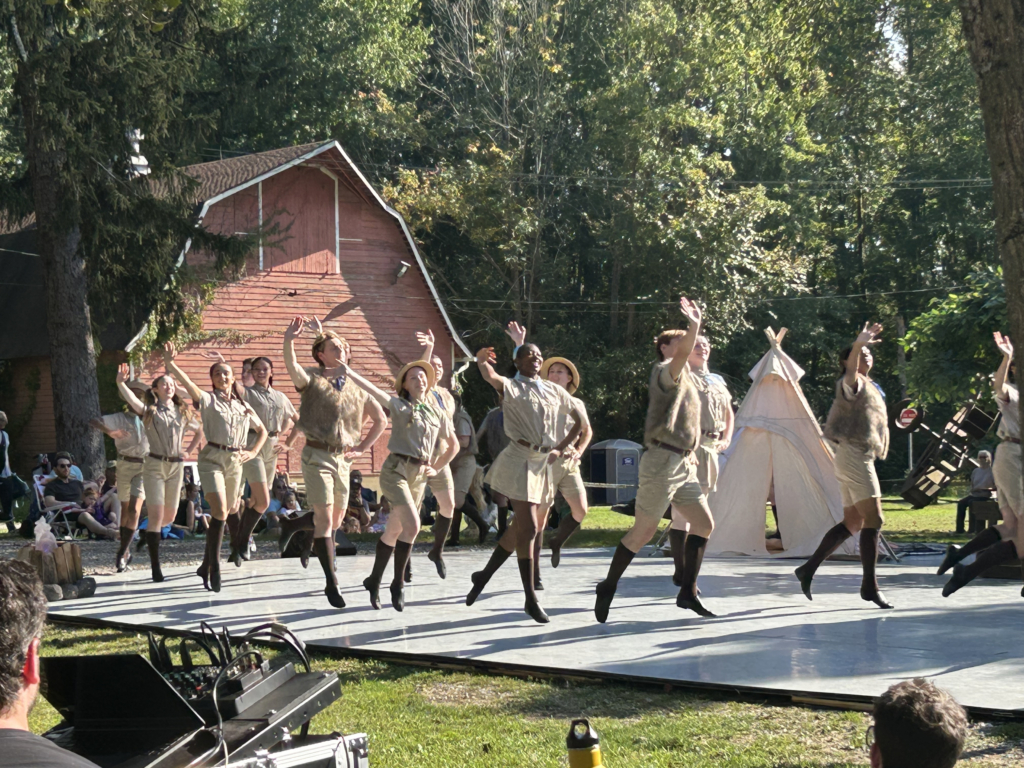
Abigail Twiford/The Sun Students at the School of Philadelphia Ballet perform a group dance number during their version of “Peter and the Wolf” at Croft Farm.
Cherry Hill recently hosted the first performance in its Ballet in the Park series at Croft Farm on Sept. 28.
The outdoor production of the classic tale, “Peter and the Wolf,” was performed by the School of Philadelphia Ballet and free to both residents and non-residents.
The performers are from the school’s pre-professional program, which allows individuals from ages 12 to 21 from all over the country – and some international students – to study ballet for hours a day while living in Philadelphia.
“This is the first time that we have held a ballet in the park,” Mayor Dave Fleisher told the Croft Farm audience, “and we weren’t sure what the turnout would be. But I’m looking at all of you and I think we made a pretty good decision.”
The farm grounds in front of the ballet stage were filled with several hundred guests on blankets or in camping chairs to watch and support the production.
“This is a community that can operate both competently and compassionately, that you can get things done, and at the same time, care about humanity, care about the arts, care about people and ultimately bring neighbors together,” Fleisher noted.
“Peter and the Wolf” was originally composed by Sergei Prokofiev as a way of getting young students introduced to classical music. The township production utilized the story’s original score, narration, choreography, costuming and puppetry.
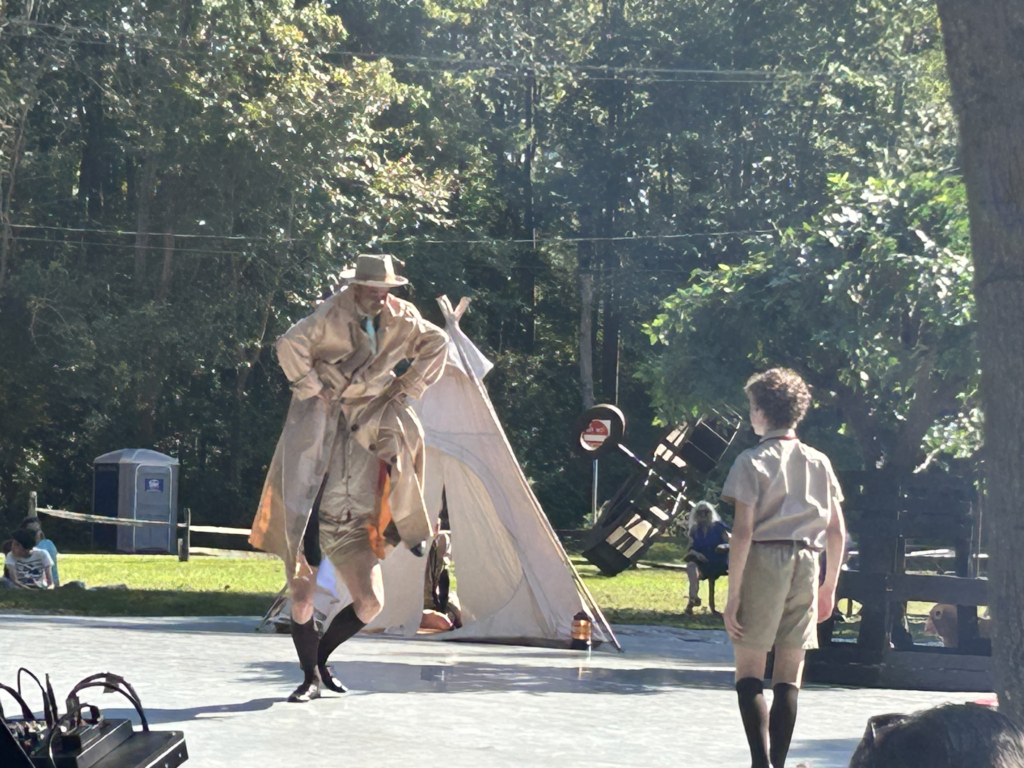
Abigail TwifordThe Sun Dancers portray the grandfather and Peter in a scene from “Peter and the Wolf.”
Dancers playing the “Peter and the Wolf” characters – from Peter to the animals in the story – were dressed in Cub Scout uniforms. The performance began with the narrator explaining that each character was represented by a different member of the orchestra, with Peter for strings, as an example, and the Bird for flute.
The story largely takes place in the meadow beyond the gate that separates Peter’s home garden from the outside world. One day, he leaves the gate open, despite his grandfather’s warnings about the wolf. Peter remains defiant and insists he doesn’t fear the animal.
The Croft Farm performance featured sparse sets and props, with only a small tent, a faux tree and campfire on stage, and the rest of the story pantomined by the dancers. The show was followed by a question-and-answer session with the young dancers led by Magge Hoelper, manager of the ballet school.
“‘Peter and the Wolf’ is an accessible story for all ages,” Hoepler noted. “I think the combination of the music, which is so iconic and inspirational, the storytelling and the ability to add dance as a form of communication really helps to inspire audiences to come to more ballet programs.”
Abigail Twiford/The Sun Students at the School of Philadelphia Ballet perform a group dance number during their version of “Peter and the Wolf” at Croft Farm.
Cherry Hill recently hosted the first performance in its Ballet in the Park series at Croft Farm on Sept. 28.
The outdoor production of the classic tale, “Peter and the Wolf,” was performed by the School of Philadelphia Ballet and free to both residents and non-residents.
The performers are from the school’s pre-professional program, which allows individuals from ages 12 to 21 from all over the country – and some international students – to study ballet for hours a day while living in Philadelphia.
“This is the first time that we have held a ballet in the park,” Mayor Dave Fleisher told the Croft Farm audience, “and we weren’t sure what the turnout would be. But I’m looking at all of you and I think we made a pretty good decision.”
The farm grounds in front of the ballet stage were filled with several hundred guests on blankets or in camping chairs to watch and support the production.
“This is a community that can operate both competently and compassionately, that you can get things done, and at the same time, care about humanity, care about the arts, care about people and ultimately bring neighbors together,” Fleisher noted.
“Peter and the Wolf” was originally composed by Sergei Prokofiev as a way of getting young students introduced to classical music. The township production utilized the story’s original score, narration, choreography, costuming and puppetry.
Abigail TwifordThe Sun Dancers portray the grandfather and Peter in a scene from “Peter and the Wolf.”
Dancers playing the “Peter and the Wolf” characters – from Peter to the animals in the story – were dressed in Cub Scout uniforms. The performance began with the narrator explaining that each character was represented by a different member of the orchestra, with Peter for strings, as an example, and the Bird for flute.
The story largely takes place in the meadow beyond the gate that separates Peter’s home garden from the outside world. One day, he leaves the gate open, despite his grandfather’s warnings about the wolf. Peter remains defiant and insists he doesn’t fear the animal.
The Croft Farm performance featured sparse sets and props, with only a small tent, a faux tree and campfire on stage, and the rest of the story pantomined by the dancers. The show was followed by a question-and-answer session with the young dancers led by Magge Hoelper, manager of the ballet school.
“‘Peter and the Wolf’ is an accessible story for all ages,” Hoepler noted. “I think the combination of the music, which is so iconic and inspirational, the storytelling and the ability to add dance as a form of communication really helps to inspire audiences to come to more ballet programs.”
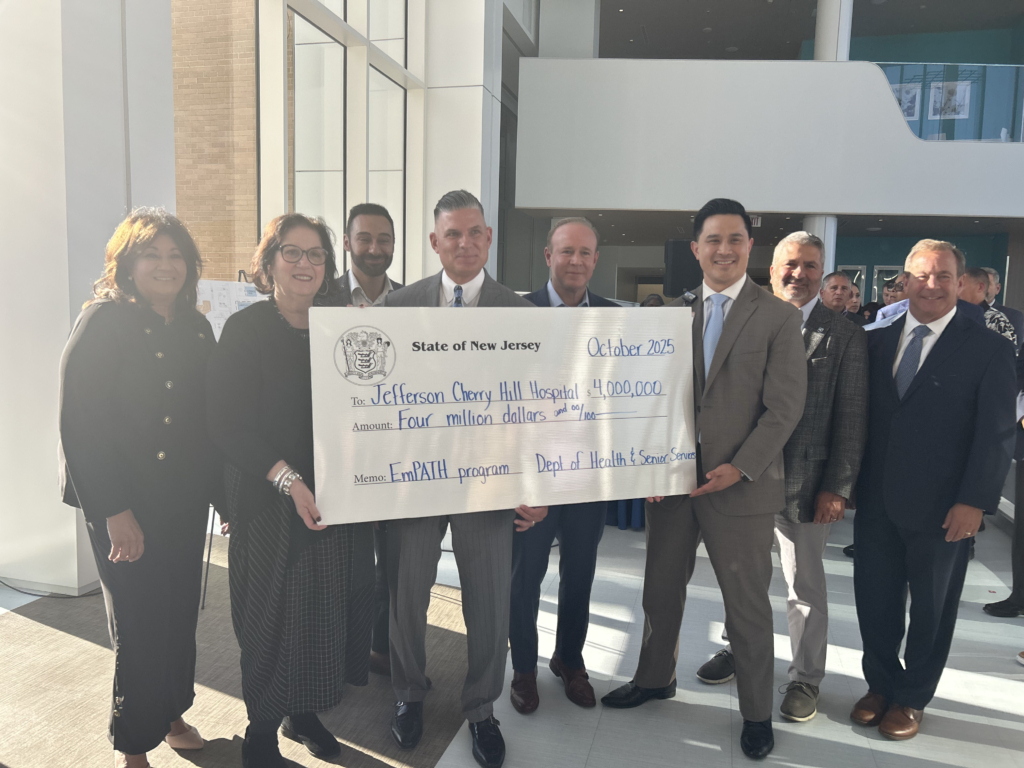
Abigail Twiford/The Sun Local and state officials join Jefferson Cherry Hill Hospital administrators as they accept a check for the construction of the new unit.
The township has taken a step toward making behavioral and mental health-care more accessible with a new unit at Jefferson Cherry Hill Hospital.
The addition of the Emergency Psychiatric Assessment, Treatment and Healing (EmPATH) unit will help address the influx of mental-health patients in the emergency department and offer a new way to guide theose patients through a crisis.
In order to implement EmPATH, the hospital will create a 4,000-square-foot facility adjacent to the existing emergency department, with private mental- and behavioral-health bays and living room-style waiting areas to create a calming atmosphere.
The new unit will be financed by a $4-million grant from the New Jersey Department of Health and Senior Services.
To celebrate the addition, Jefferson Cherry Hill hosted a recent check presentation with state and local officials who played a role in bringing the unit to fruition. Aaron Chang, president of Jefferson Health-East, was there to explain the need for EmPATH, including the fact that Camden County has seen a 400% increase in behavioral-health patients in the last decade.
“They’ll receive treatment, support and, most importantly, dignity in their most vulnerable moments,” he explained, “and they will leave not only stabilized, but with a plan for what comes next.”
Chang added that area residents report some of the highest levels of mental-health distress in the state, with 22% saying they frequently experience days when their mental health is questionable.
Jefferson’s CEO, Dr. Joseph Cacchione, emphasized the strain emergency departments and health-care providers have been under as the demand for mental-health care continues to rise in the wake of COVID.
“What we’re launching here today is not simply a new program,” he noted. “It’s really a new approach, and this EmPATH model … allows us to rethink how we deliver mental-health care. It represents a shift from reactive care to more proactive and specialized intervention.”
Cacchione also expressed gratitude to the government, public, private and nonprofit organizations and partnerships that helped create the EmPATH model and the new Jefferson facility.
Assemblywoman Melinda Kane was on hand for the check presentation and expressed her appreciation for the new unit.
“As a longtime resident of Cherry Hill,” she said, “I’m so proud to be here today … For residents of Cherry Hill, we know how much it has grown … To be here today for the opening of this department, this unit, it’s wonderful, because we know that you can come to this facility and be treated for everything that you need.”
Assembly Majority Leader Lou Greenwald talked about how the more patient-centered approach of EmPATH not only results in better outcomes, but also less cost and strain on the overall system.
“The reality is that this program takes that patient and puts them in a better setting that has a better patient experience,” he observed, “with a better patient outcome … ”
Abigail Twiford/The Sun Local and state officials join Jefferson Cherry Hill Hospital administrators as they accept a check for the construction of the new unit.
The township has taken a step toward making behavioral and mental health-care more accessible with a new unit at Jefferson Cherry Hill Hospital.
The addition of the Emergency Psychiatric Assessment, Treatment and Healing (EmPATH) unit will help address the influx of mental-health patients in the emergency department and offer a new way to guide theose patients through a crisis.
In order to implement EmPATH, the hospital will create a 4,000-square-foot facility adjacent to the existing emergency department, with private mental- and behavioral-health bays and living room-style waiting areas to create a calming atmosphere.
The new unit will be financed by a $4-million grant from the New Jersey Department of Health and Senior Services.
To celebrate the addition, Jefferson Cherry Hill hosted a recent check presentation with state and local officials who played a role in bringing the unit to fruition. Aaron Chang, president of Jefferson Health-East, was there to explain the need for EmPATH, including the fact that Camden County has seen a 400% increase in behavioral-health patients in the last decade.
“They’ll receive treatment, support and, most importantly, dignity in their most vulnerable moments,” he explained, “and they will leave not only stabilized, but with a plan for what comes next.”
Chang added that area residents report some of the highest levels of mental-health distress in the state, with 22% saying they frequently experience days when their mental health is questionable.
Jefferson’s CEO, Dr. Joseph Cacchione, emphasized the strain emergency departments and health-care providers have been under as the demand for mental-health care continues to rise in the wake of COVID.
“What we’re launching here today is not simply a new program,” he noted. “It’s really a new approach, and this EmPATH model … allows us to rethink how we deliver mental-health care. It represents a shift from reactive care to more proactive and specialized intervention.”
Cacchione also expressed gratitude to the government, public, private and nonprofit organizations and partnerships that helped create the EmPATH model and the new Jefferson facility.
Assemblywoman Melinda Kane was on hand for the check presentation and expressed her appreciation for the new unit.
“As a longtime resident of Cherry Hill,” she said, “I’m so proud to be here today … For residents of Cherry Hill, we know how much it has grown … To be here today for the opening of this department, this unit, it’s wonderful, because we know that you can come to this facility and be treated for everything that you need.”
Assembly Majority Leader Lou Greenwald talked about how the more patient-centered approach of EmPATH not only results in better outcomes, but also less cost and strain on the overall system.
“The reality is that this program takes that patient and puts them in a better setting that has a better patient experience,” he observed, “with a better patient outcome … ”