Author: atwiford

  • Professor discusses how to judge online ‘facts’

    Abigail Twiford/The Sun
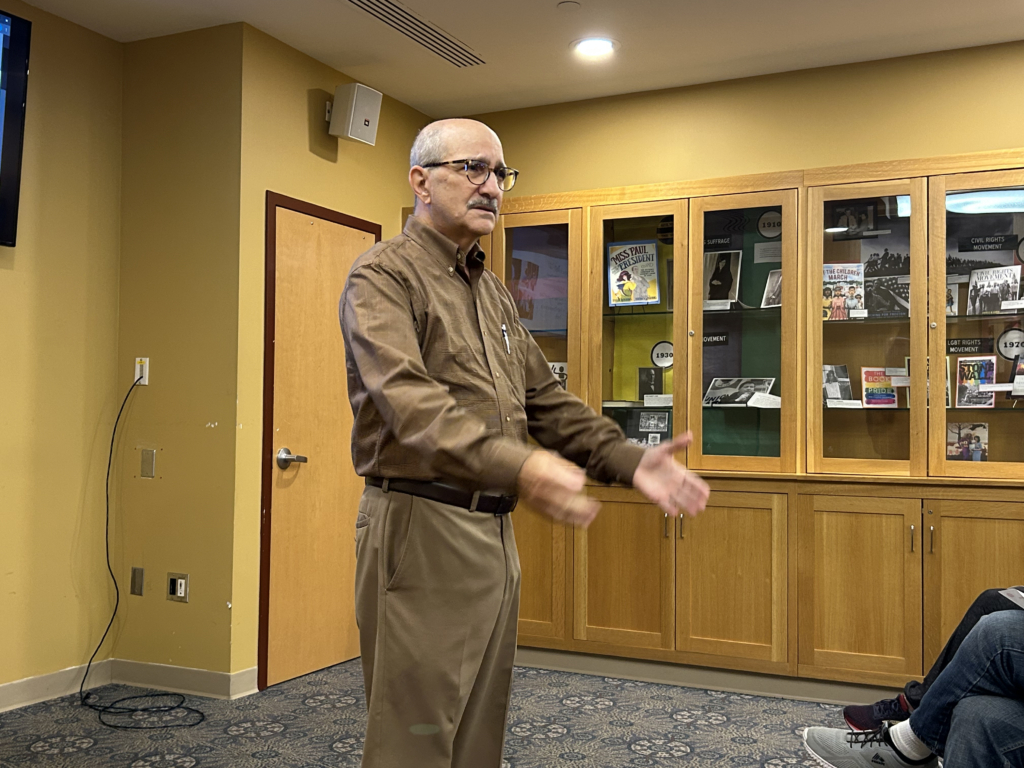
    Speaker Joseph Assalone has 45 years of experience as a CPA and recently retired from his position as adjunct professor of taxation at Rowan College of South Jersey.

    The township library addressed the issue of online misinformation and how to be more aware of it by hosting an AARP Community Conversation on Oct. 16 entitled, “Tips for Being News Savvy Online.”

    The speaker was Joseph Assalone, who has 45 years of experience as a CPA and recently retired from his position as adjunct professor of taxation at Rowan College of South Jersey. Much of his career has focused on “professional skepticism,” a skill that separates fact, fiction and opinion online.

    Assalone began his presentation by offering attendees pamphlets on how to tell if something online is truthful or not. He then discussed fake news – including satire and parody, propaganda and deep fakes – and how social media helps spread it.

    “Now, social media has done a revolutionary thing in making news available to us that could come from anybody,” he acknowledged. “But it’s not even well-known sources anymore. Anybody can get on and spread all kinds of craziness.” 

    A video Assalone showed from FactCheck.org explained how one can evaluate a source’s credibility, offering tips like reading past a headline before sharing a news story, double checking information with secondary sources and using fact-checking websites.

    Assalone also described “post- truth,” when objective fact is less influential than emotional appeals in public opinion. 

    “There is, in society now, an increasing tolerance for BS,” observed audience member Cary Hillebrand. “An alternative fact means if you don’t like what the news is presenting, courtesy of Google, you can find whatever echo chamber fits off what you want to hear.”

    In addition to information that is untrue, Assalone also discussed the various ways reputable news outlets can still skew stories, through word choice, the decision to omit certain details, the author’s personal bias, spin or slant.

    Participants were encouraged to consider their own biases when evaluating information, namely accepting something just because it validates a particular viewpoint. An information outlet’s own biases are also an issue.

    Deepfakes, images and videos created through AI – as well as doctored images – were illustrated by the TikTok video of a man who creates deepfakes of himself as actor Tom Cruise. Examples of AI power and influence were also addressed.

    “There are events in human civilization which actually change civilization,” Assalone explained. “The fall of the Roman Empire, the end of World War II, the Industrial Revolution, the internet. AI is in that same category, and it is going to change every single thing.”

    Assalone also showed the audience how to report false information on sites like Facebook and how to use fact checking websites like Snopes, FactCheck.org and Politifact. The group also talked about how divisive the news landscape has become, with Assalone mentioning that politicians seem to be more willing to say things they wouldn’t have in past decades.

    “I think that’s the difference in the politicians now than maybe 20 to 30 years ago,” he observed. “They were guarded about what they said because they knew that they were in a position of power, and your words are going to do tremendous harm.

    “They don’t care. They don’t seem to care now.” 
  • Professor discusses how to judge online ‘facts’

    Abigail Twiford/The Sun
    Speaker Joseph Assalone has 45 years of experience as a CPA and recently retired from his position as adjunct professor of taxation at Rowan College of South Jersey.

    The township library addressed the issue of online misinformation and how to be more aware of it by hosting an AARP Community Conversation on Oct. 16 entitled, “Tips for Being News Savvy Online.”

    The speaker was Joseph Assalone, who has 45 years of experience as a CPA and recently retired from his position as adjunct professor of taxation at Rowan College of South Jersey. Much of his career has focused on “professional skepticism,” a skill that separates fact, fiction and opinion online.

    Assalone began his presentation by offering attendees pamphlets on how to tell if something online is truthful or not. He then discussed fake news – including satire and parody, propaganda and deep fakes – and how social media helps spread it.

    “Now, social media has done a revolutionary thing in making news available to us that could come from anybody,” he acknowledged. “But it’s not even well-known sources anymore. Anybody can get on and spread all kinds of craziness.” 

    A video Assalone showed from FactCheck.org explained how one can evaluate a source’s credibility, offering tips like reading past a headline before sharing a news story, double checking information with secondary sources and using fact-checking websites.

    Assalone also described “post- truth,” when objective fact is less influential than emotional appeals in public opinion. 

    “There is, in society now, an increasing tolerance for BS,” observed audience member Cary Hillebrand. “An alternative fact means if you don’t like what the news is presenting, courtesy of Google, you can find whatever echo chamber fits off what you want to hear.”

    In addition to information that is untrue, Assalone also discussed the various ways reputable news outlets can still skew stories, through word choice, the decision to omit certain details, the author’s personal bias, spin or slant.

    Participants were encouraged to consider their own biases when evaluating information, namely accepting something just because it validates a particular viewpoint. An information outlet’s own biases are also an issue.

    Deepfakes, images and videos created through AI – as well as doctored images – were illustrated by the TikTok video of a man who creates deepfakes of himself as actor Tom Cruise. Examples of AI power and influence were also addressed.

    “There are events in human civilization which actually change civilization,” Assalone explained. “The fall of the Roman Empire, the end of World War II, the Industrial Revolution, the internet. AI is in that same category, and it is going to change every single thing.”

    Assalone also showed the audience how to report false information on sites like Facebook and how to use fact checking websites like Snopes, FactCheck.org and Politifact. The group also talked about how divisive the news landscape has become, with Assalone mentioning that politicians seem to be more willing to say things they wouldn’t have in past decades.

    “I think that’s the difference in the politicians now than maybe 20 to 30 years ago,” he observed. “They were guarded about what they said because they knew that they were in a position of power, and your words are going to do tremendous harm.

    “They don’t care. They don’t seem to care now.” 
  • Library costume swap is easy on the wallet

    Libraries are centers of reuse and sustainability in communities worldwide, and Cherry Hill’s is no exception. Besides loaning books and other materials to residents, the facility also hosts sales and exchanges of lightly used goods, among them its Halloween costume swap on Oct. 15.

    Photos by Abigail Twiford/The Sun
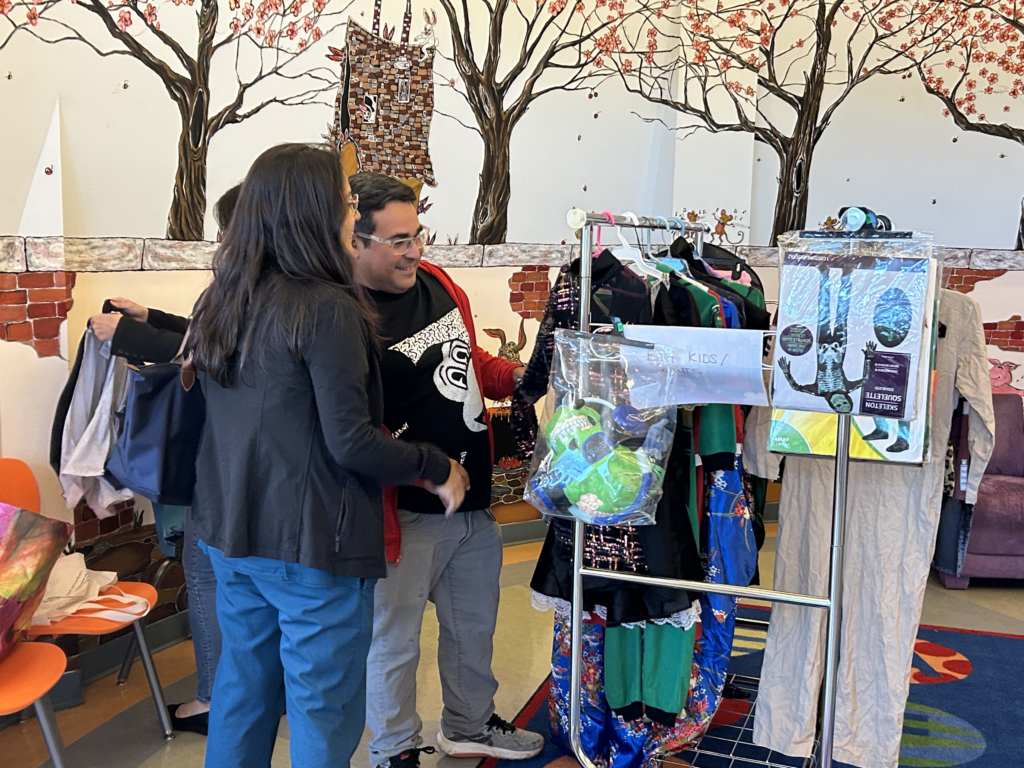
    Residents go through clothing racks at the second annual Halloween costume swap on Oct. 15.

    It was the second consecutive year for the event, which takes place as Halloween approaches.

    “It was a huge hit,” said library director Tierney Miller. “Last year, we actually got some local broadcast news coverage, so we were on the local evening news.

    The swap is the work of the library’s youth services department, which handles the sorting of costumes and other items. Two sessions – one in the morning and one in the evening – took place in the children’s story time and craft room. Both sessions of the swap attracted dozens of residents, including 92 in the morning.

    “It seems pretty popular with folks,” Miller noted. “Halloween costumes are expensive and you only wear them once, so it’s a really good chance for people to maybe get something good and not have to spend any money.” 

    Several tables and clothing racks were set up for the swap, with clothing items sorted into age ranges. Also available were accessories like wigs, masks and hats, and even props like plastic tools. 

    “We do our best to merchandise,” Miller said. “It’s a lot of things in bags.”

    Collections for the swap began a month ahead; the library was open for donations from Sept. 15 to Oct. 12.

    “We just advertise that we need donations through our social media and email and stuff, and the community shows up,” Miller commented. 

    He pointed out how many items were for kids, with several Disney princess and superhero costumes on display. 

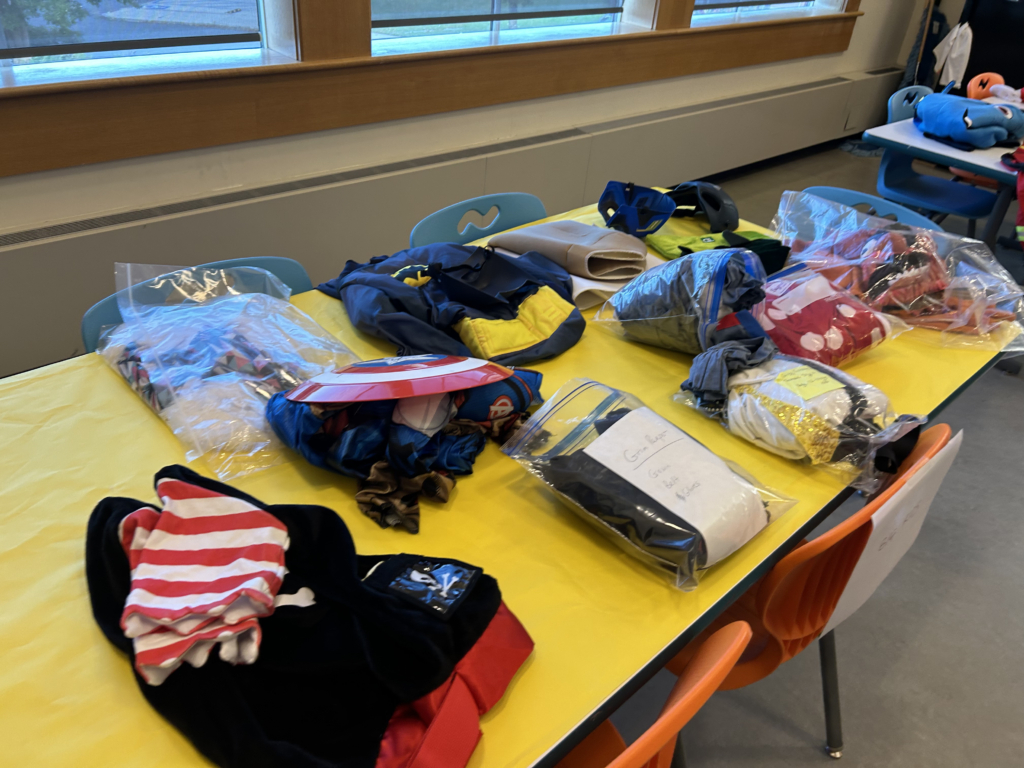
    At the back of the room, one of the tables specifically for child sized costumes displays various items.

    “We tend to get kids costumes, probably because kids outgrow costumes year to year,” Miller explained. “So I’m sure families have a lot of them on hand. I know I did … I would say like 95% are for kids.” 

    Patrons were not required to donate a costume in order to take one home.

    “Aside from being a great way to save money, it’s also really sustainable,” Miller offered. “Instead of throwing the costume in the landfill or just having it collect dust in your closet, you can pass it on to another family, another person, and it has a new life …

    “It’s good for the environment and it’s good for people’s wallets.”

  • Library costume swap is easy on the wallet

    Libraries are centers of reuse and sustainability in communities worldwide, and Cherry Hill’s is no exception. Besides loaning books and other materials to residents, the facility also hosts sales and exchanges of lightly used goods, among them its Halloween costume swap on Oct. 15.

    Photos by Abigail Twiford/The Sun
    Residents go through clothing racks at the second annual Halloween costume swap on Oct. 15.

    It was the second consecutive year for the event, which takes place as Halloween approaches.

    “It was a huge hit,” said library director Tierney Miller. “Last year, we actually got some local broadcast news coverage, so we were on the local evening news.

    The swap is the work of the library’s youth services department, which handles the sorting of costumes and other items. Two sessions – one in the morning and one in the evening – took place in the children’s story time and craft room. Both sessions of the swap attracted dozens of residents, including 92 in the morning.

    “It seems pretty popular with folks,” Miller noted. “Halloween costumes are expensive and you only wear them once, so it’s a really good chance for people to maybe get something good and not have to spend any money.” 

    Several tables and clothing racks were set up for the swap, with clothing items sorted into age ranges. Also available were accessories like wigs, masks and hats, and even props like plastic tools. 

    “We do our best to merchandise,” Miller said. “It’s a lot of things in bags.”

    Collections for the swap began a month ahead; the library was open for donations from Sept. 15 to Oct. 12.

    “We just advertise that we need donations through our social media and email and stuff, and the community shows up,” Miller commented. 

    He pointed out how many items were for kids, with several Disney princess and superhero costumes on display. 

    At the back of the room, one of the tables specifically for child sized costumes displays various items.

    “We tend to get kids costumes, probably because kids outgrow costumes year to year,” Miller explained. “So I’m sure families have a lot of them on hand. I know I did … I would say like 95% are for kids.” 

    Patrons were not required to donate a costume in order to take one home.

    “Aside from being a great way to save money, it’s also really sustainable,” Miller offered. “Instead of throwing the costume in the landfill or just having it collect dust in your closet, you can pass it on to another family, another person, and it has a new life …

    “It’s good for the environment and it’s good for people’s wallets.”